What is the McKinsey Redrock Game? Complete Guide to the Research Station Scenario
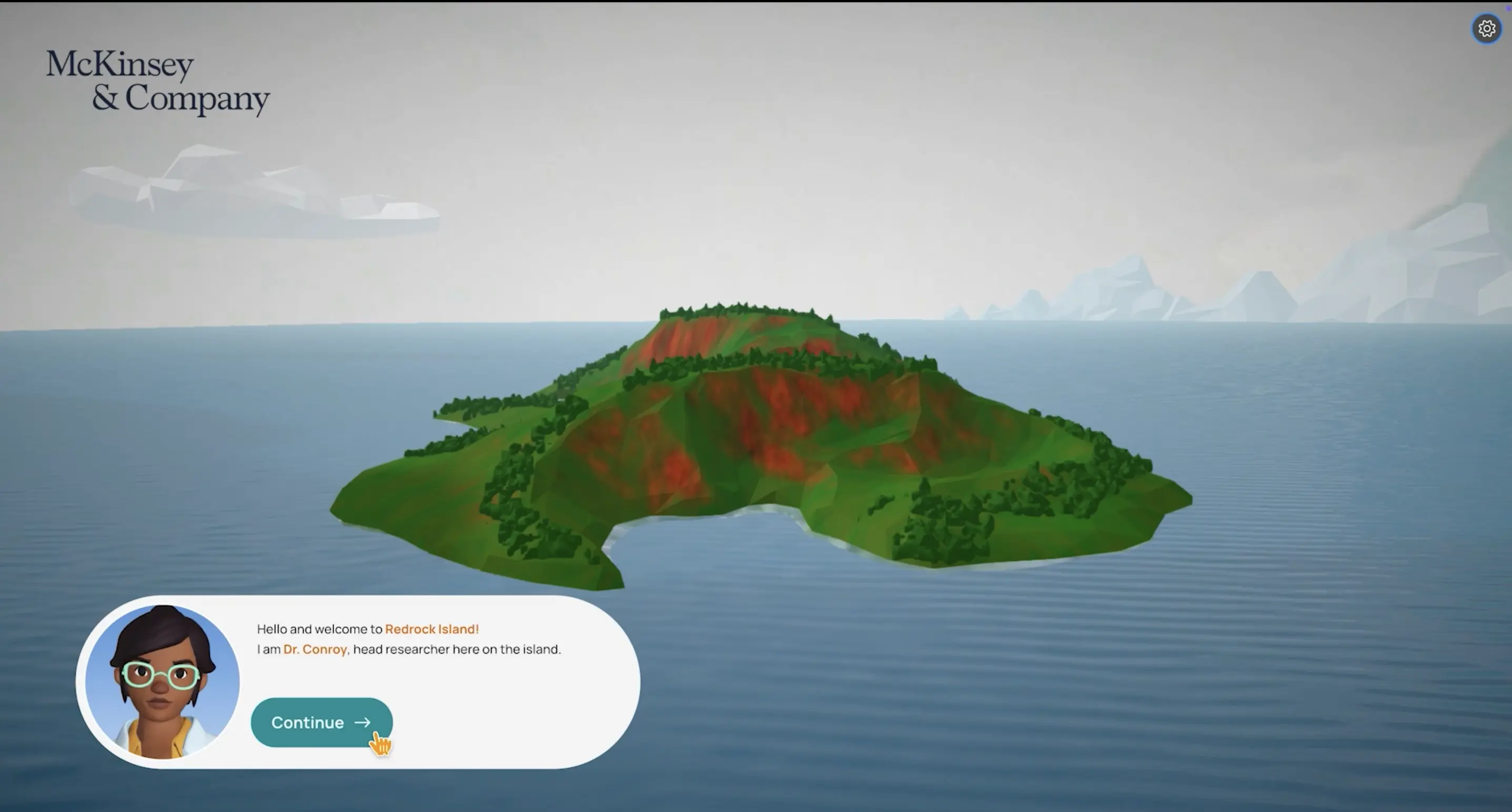
The McKinsey Redrock Casestudy is an interactive game that has become the cornerstone of McKinsey’s digital assessment process. If you’re preparing for the McKinsey Solve Game, understanding Redrock is absolutely essential - it’s the core game of the assessment and has been consistently present while other mini-games have been introduced or phased out over time.
Understanding the Redrock Game
The Redrock Study places you at a remote research station where you’ll analyze data, identify patterns, and solve problems. Think of Redrock as the core mathematical and analytical element that replaced the traditional McKinsey Problem Solving Test (PST), testing your quantitative reasoning abilities through an engaging, interactive format.
Why Redrock Matters
While there are multiple games in the McKinsey Solve assessment, Redrock is the most time-intensive and analytically demanding. It’s designed to evaluate the same core competencies that the Problem Solving Test once assessed, but through a more dynamic and realistic scenario.
The game tests your knowledge across a range of mathematical concepts including:
- Means and averages - Calculating and interpreting central tendencies
- Probabilities - Understanding likelihood and statistical reasoning
- Arithmetic operations - Quick mental math and calculations
- Data interpretation - Reading charts, graphs, and tables
- Pattern recognition - Identifying trends and relationships in data
What Makes Redrock Different from Other Games
Unlike other mini-games in the Solve assessment (such as Sea Wolf, which focuses more on logic and strategic thinking), Redrock emphasizes quantitative analysis and mathematical problem-solving. Here’s what sets it apart:
Analytical Depth: Redrock requires deeper mathematical reasoning than other scenarios. While games like Sea Wolf test ancillary attributes such as systems thinking and logic, Redrock directly evaluates your ability to work with numbers, data, and quantitative relationships.
Process Score: A unique aspect of Redrock is that McKinsey doesn’t just evaluate your final answers - the game also tracks how you reach your conclusions. An interactive dashboard allows you to drag numbers, use an onscreen calculator, and manipulate data. Your interactions with these tools contribute to your overall assessment.
Time Investment: Redrock typically takes longer to complete than other mini-games, reflecting its comprehensive nature and the depth of analysis required.
The Four Phases of Redrock (February 2026 Structure)
The Redrock game is broken down into four distinct phases, each testing different aspects of your analytical abilities. Understanding this structure is crucial for effective preparation.
Phase 1: Investigation Phase
What It Is: This is your introduction to the case study. You’ll receive a text-based scenario with background information about the research station, the organisms being studied, and the environmental conditions.
What You’ll Do:
- Read through the case study carefully
- Identify key information and data points
- Use the interactive journal to save relevant details
- Drag important information into your notes
Key Features:
- The case study text includes draggable information that you can save to your journal
- Not all information will be relevant - part of the challenge is identifying what matters
- You can rename, reorder, and highlight saved information in your journal
- Take your time here - the information you capture will be crucial for later phases
Pro Tip: Don’t feel overwhelmed by the amount of text. Focus on extracting data points, numerical values, and key relationships. Our Redrock simulator models this format exactly, so you can practice the interface before test day.
Phase 2: Analysis Phase
What It Is: This phase presents you with three questions based on the case study you just reviewed. These questions test your ability to analyze the data you collected and draw logical conclusions.
What You’ll Do:
- Answer three analytical questions
- Apply mathematical reasoning to solve problems
- Cross-reference your saved notes with the questions
- Use the onscreen calculator for computations
Important Variations:
The format of this phase can vary between test-takers:
-
Individual Page Format: Sometimes questions appear on separate pages. Once you answer a question and move forward, you cannot return to change your answer. This format is more challenging because you might realize an earlier mistake only after seeing subsequent questions.
-
Same Page Format: Other times, all three questions appear on the same page, allowing you to review and modify answers before moving forward.
In our simulator, we prepare you for the harder scenario (individual pages) so you’re ready for the most challenging version.
Access to Previous Information: During the analysis phase, you may be able to return to the original investigation phase text. However, once you proceed to the report phase, you’ll lose access to the investigation phase entirely. Plan accordingly.
Phase 3: Report Phase
What It Is: The report phase has two distinct components where you’ll synthesize your analysis and present findings.
Two Categories:
-
Written Report
- Fill-in-the-blank style questions
- Requires you to complete sentences or paragraphs based on your analysis
- Tests your ability to articulate findings clearly
- May involve selecting appropriate conclusions from options
-
Visual Report
- Create or complete charts and graphs
- Visual representation of data based on previous sections
- Tests your ability to translate numerical findings into visual formats
- May require selecting appropriate chart types or completing partial visualizations
Critical Limitation: Once you enter the report phase, you cannot return to the investigation phase. Make sure you’ve captured all necessary information in your journal before proceeding.
Phase 4: Case Phase
What It Is: The final phase consists of six individual, stand-alone questions that are completely independent of the previous three phases.
What You’ll Do:
- Answer six separate quantitative questions
- Each question presents its own mini-scenario
- Apply mathematical and logical reasoning to each problem
- Work through questions independently
Key Characteristics:
- No connection to the earlier research station narrative
- Fresh data and context for each question
- Tests pure problem-solving ability without accumulated context
- Variety of question types and mathematical concepts
This phase functions like a traditional problem-solving test, with discrete questions that each require analytical thinking and calculation.
The Interactive Dashboard: Your Key Tools
One of Redrock’s most distinctive features is its interactive dashboard, which includes several tools designed to help you analyze data and solve problems. Using these tools isn’t optional - it’s part of how McKinsey evaluates your problem-solving process.
The Digital Journal
The journal is your workspace for organizing information throughout the game.
What You Can Do:
- Save information: Drag relevant data from the case study into your journal
- Rename items: Give your saved information clear, memorable labels
- Reorder information: Arrange notes in a logical sequence
- Highlight key points: Emphasize critical data for quick reference
Why It Matters: McKinsey has included these features in the tutorial for a reason. Interacting with the journal may contribute to your process score. Candidates who organize their information systematically demonstrate structured thinking - exactly what McKinsey looks for in consultants.
The Onscreen Calculator
Every candidate gets access to a built-in calculator during the Redrock game.
Why You Must Use It: While you might be tempted to use your own calculator or do mental math, you should definitely use the onscreen calculator. Here’s why:
-
Process Score: Your calculator usage is likely tracked and may contribute to your evaluation. Just as showing your work earns points in a math exam, demonstrating your calculation process may help your score.
-
Anti-Cheating Measure: McKinsey may use calculator interactions to verify you’re solving problems authentically without AI assistance or external help.
-
Intentional Design: The calculator is prominently featured in the tutorial. McKinsey knows you have a calculator on your phone or computer - if they’ve built one into the game, they expect you to use it.
-
Avoid Penalties: Not using the provided calculator might result in penalties or reduced process scores. Why take that risk?
Bottom Line: They’ve given you these tools for a reason. Use them.
What to Expect in Your Redrock Assessment
Time Investment
Redrock is the most time-intensive game in the McKinsey Solve assessment. While exact timing can vary, expect to spend:
- Investigation Phase: 8-12 minutes reading and taking notes
- Analysis Phase: 10-15 minutes answering questions
- Report Phase: 8-12 minutes completing reports
- Case Phase: 10-15 minutes on standalone questions
Total: Approximately 35-50 minutes, making it the longest single component of the Solve Game.
Difficulty Level
Redrock is generally considered the most analytically challenging game in the assessment. The mathematical concepts aren’t extremely advanced, but the combination of time pressure, multiple phases, and the need to track information across different sections creates significant cognitive demand.
What Makes It Challenging
- Information Overload: The investigation phase presents substantial text and data
- No Backtracking: Limited or no ability to return to previous phases
- Process Tracking: Awareness that your methods are being evaluated adds pressure
- Integration Required: Later questions often build on earlier analysis
- Varied Question Types: Each phase tests different skills
How to Prepare for Redrock
1. Practice with Realistic Simulators
The most effective preparation is hands-on practice with the actual game format. Our Redrock simulator provides:
- Exact replication of the interface and dashboard
- All four phases with authentic structure
- Interactive journal and calculator
- Realistic case studies and questions
- Performance feedback and analytics
2. Strengthen Your Math Fundamentals
Review key concepts that appear in Redrock:
- Averages and means: Calculating and interpreting
- Percentages and ratios: Quick conversions and comparisons
- Probability basics: Understanding likelihood and outcomes
- Data interpretation: Reading charts, graphs, and tables quickly
- Basic statistics: Understanding data distributions and trends
3. Develop Note-Taking Strategies
Practice efficient information capture:
- Identify key data points quickly
- Create clear, concise labels
- Organize notes logically
- Highlight critical numbers and relationships
4. Build Speed and Accuracy
Work on solving problems both quickly and correctly:
- Time yourself on practice problems
- Focus on accuracy first, then increase speed
- Practice mental math for simple calculations
- Learn to estimate when exact answers aren’t needed
5. Study the Interface
Familiarize yourself with the tools:
- Practice dragging and organizing information
- Get comfortable with the calculator interface
- Understand how to navigate between sections
- Learn the journal features thoroughly
Common Mistakes to Avoid
1. Rushing Through Investigation
Many candidates skim the case study too quickly, missing critical information. Take your time in the investigation phase - the minutes you invest in thorough reading and note-taking will pay off in later phases.
2. Not Using the Provided Tools
Some candidates ignore the journal and calculator, thinking they’re faster with their own methods. This is a mistake. Use the provided tools as intended - they’re part of your assessment.
3. Poor Information Organization
Saving everything without organization creates confusion later. Be selective about what you save, and organize your notes clearly with descriptive labels.
4. Neglecting the Tutorial
The tutorial provides crucial information about game mechanics and available tools. Never skip it, even if you’ve practiced extensively. Each version might have slight variations.
5. Panicking About Process Score
While you should use the tools appropriately, don’t become so focused on the process that you sacrifice accuracy. Find a balance between demonstrating good methodology and actually solving the problems correctly.
Redrock vs. Other McKinsey Games
Understanding how Redrock compares to other scenarios helps you adjust your mindset:
Redrock: Quantitative analysis, mathematical reasoning, data interpretation Sea Wolf: Logic, pattern recognition, strategic thinking, qualitative reasoning Ecosystem Building: Systems thinking, strategic planning, resource management Plant Defense: Tactical decision-making, resource optimization, spatial reasoning
Redrock is the most “test-like” of all the games, functioning as a direct replacement for the traditional Problem Solving Test but delivered through an engaging scenario.
Final Thoughts
The McKinsey Redrock game is the cornerstone of the Solve assessment - a comprehensive evaluation of your quantitative reasoning and analytical abilities. Success requires a combination of mathematical skills, strategic information management, and familiarity with the interactive interface.
The key to excelling in Redrock is deliberate practice with realistic scenarios. Understanding the four-phase structure, mastering the interactive tools, and building confidence with mathematical problem-solving will position you for success.
Remember: Redrock isn’t just testing whether you can find the right answers. It’s evaluating how you think, how you organize information, and how you approach complex analytical challenges - exactly the skills you’ll need as a McKinsey consultant.
Ready to Master Redrock?
Start your preparation today:
- Try Our Free Redrock Simulator - Practice with authentic scenarios and interface
- Read the Complete Strategy Guide - Detailed tactics for each phase
- Explore All McKinsey Games - Understand the full assessment
With the right preparation and a solid understanding of the game structure, you can approach Redrock with confidence and demonstrate your analytical capabilities effectively.
Have questions about Redrock? Contact us for personalized guidance, or check out our pricing plans to access premium practice resources and advanced analytics.
Ready to Practice?
Get unlimited access to our McKinsey Solve Game simulators and master every scenario with realistic practice.